How to Keep Your Lawn Green During Atlanta’s Summer Heat
A green lawn in the height of an Atlanta summer isn’t the result of luck or constant intervention—it’s the outcome of smart landscape planning. When temperatures rise and rainfall becomes unpredictable, lawns that haven’t been designed for heat resilience often show it first. Browning patches, thinning turf, and uneven growth are usually signs of stress rooted in design and system issues, not simple neglect.
For homeowners who value a polished, family-friendly outdoor environment, summer lawn performance starts long before the heat arrives. A healthy summer lawn is less about reacting to heat and more about preparing for it.
Why Atlanta Summers Are Hard on Lawns
Atlanta’s summers combine intense heat, high humidity, and inconsistent rainfall. These conditions place turf under prolonged stress, especially in lawns that are overexposed or poorly supported by irrigation and drainage.
Heat stress often reveals underlying issues such as shallow root systems, uneven watering, compacted soil, or lawn areas placed where they receive relentless sun and reflected heat. When lawns struggle, it’s rarely because they weren’t watered enough—it’s because they weren’t designed to handle summer conditions efficiently.
Lawn Health Begins With Design Decisions
One of the most overlooked factors in summer lawn performance is layout. Where lawn areas are placed—and how large they are—directly impacts how they respond to heat.
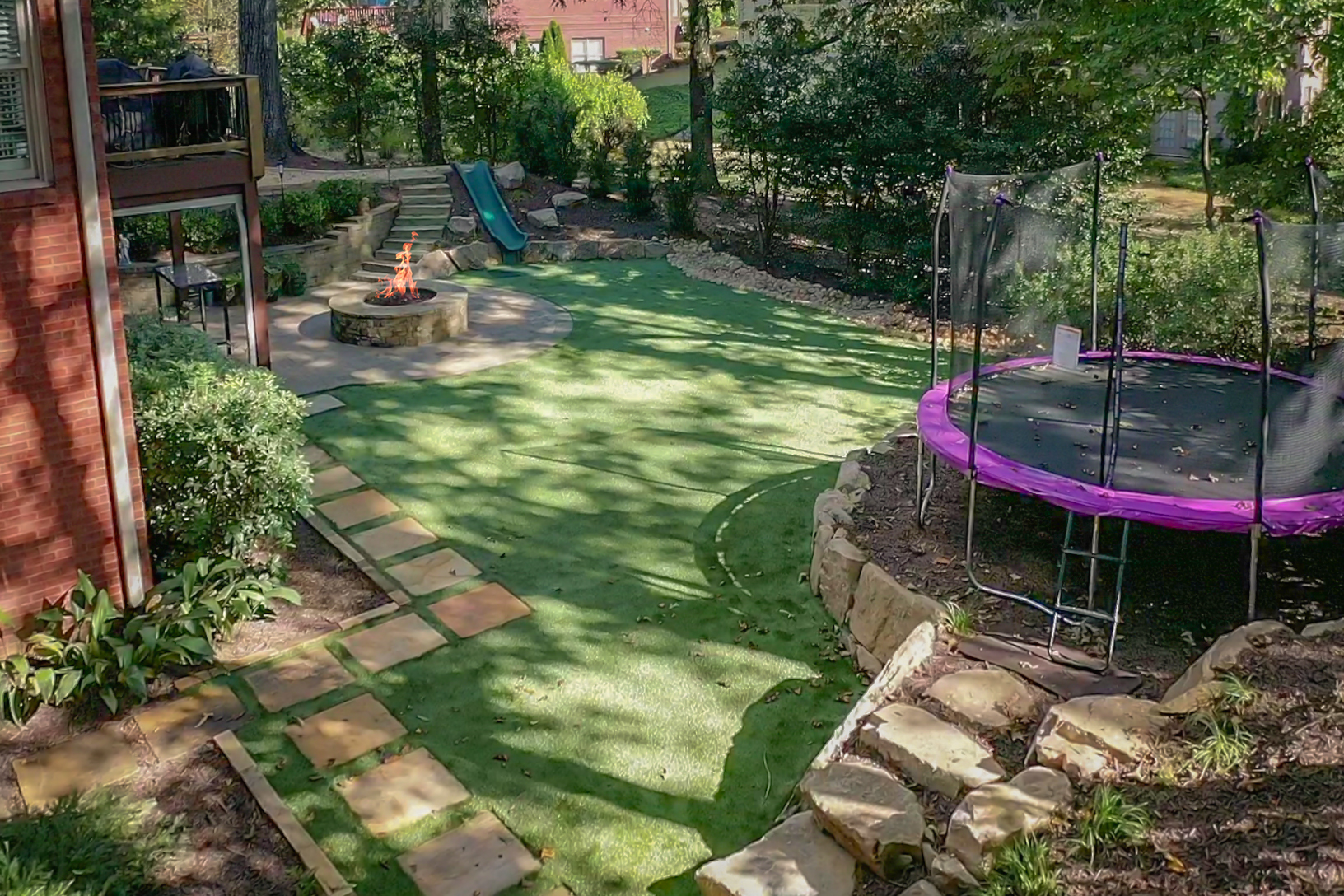
Lawns that are positioned primarily for appearance rather than function often take the brunt of summer stress. In contrast, lawns that are intentionally located where families actually use them benefit from better planning, improved circulation, and more thoughtful irrigation coverage. Reducing unnecessary turf and balancing lawn areas with hardscape and planting helps limit exposure while maintaining a refined aesthetic.
Sun Exposure and Heat Reflection Matter
Not all sun exposure is equal. Lawns adjacent to patios, pool decks, or large expanses of stone often experience additional heat from reflection, accelerating moisture loss and stress.
Design-conscious landscapes account for this by buffering lawn areas with planting, adjusting grading, or incorporating shade elements that soften extreme exposure. These subtle design choices can significantly reduce temperature stress without compromising the openness of the space.
Smart Irrigation Is Essential—Not Optional
In summer, irrigation strategy becomes one of the most important factors in keeping lawns green. However, more water is not the answer. In fact, overwatering is one of the most common causes of weakened turf during hot months.
Well-designed irrigation systems deliver water evenly and efficiently, allowing moisture to reach deeper into the soil where roots can access it longer. Zoned irrigation ensures that lawn areas receive water based on sun exposure and usage rather than a one-size-fits-all schedule. When irrigation responds to real conditions instead of fixed assumptions, lawns remain healthier with less waste.
Timing Makes a Bigger Difference Than Volume
When water is applied is just as important as how much is used. Poor timing can lead to evaporation, runoff, and unnecessary stress.
Lawns benefit most when watering supports absorption and root development rather than surface saturation. Efficient timing reduces moisture loss and allows turf to recover more effectively during prolonged heat. This is especially important during Atlanta’s peak summer months, when daytime watering can do more harm than good.
Soil Conditions Influence Summer Performance
Healthy lawns depend on healthy soil, yet soil conditions are often ignored until problems appear. Compacted soil, poor drainage, and inconsistent moisture retention all contribute to summer burnout.
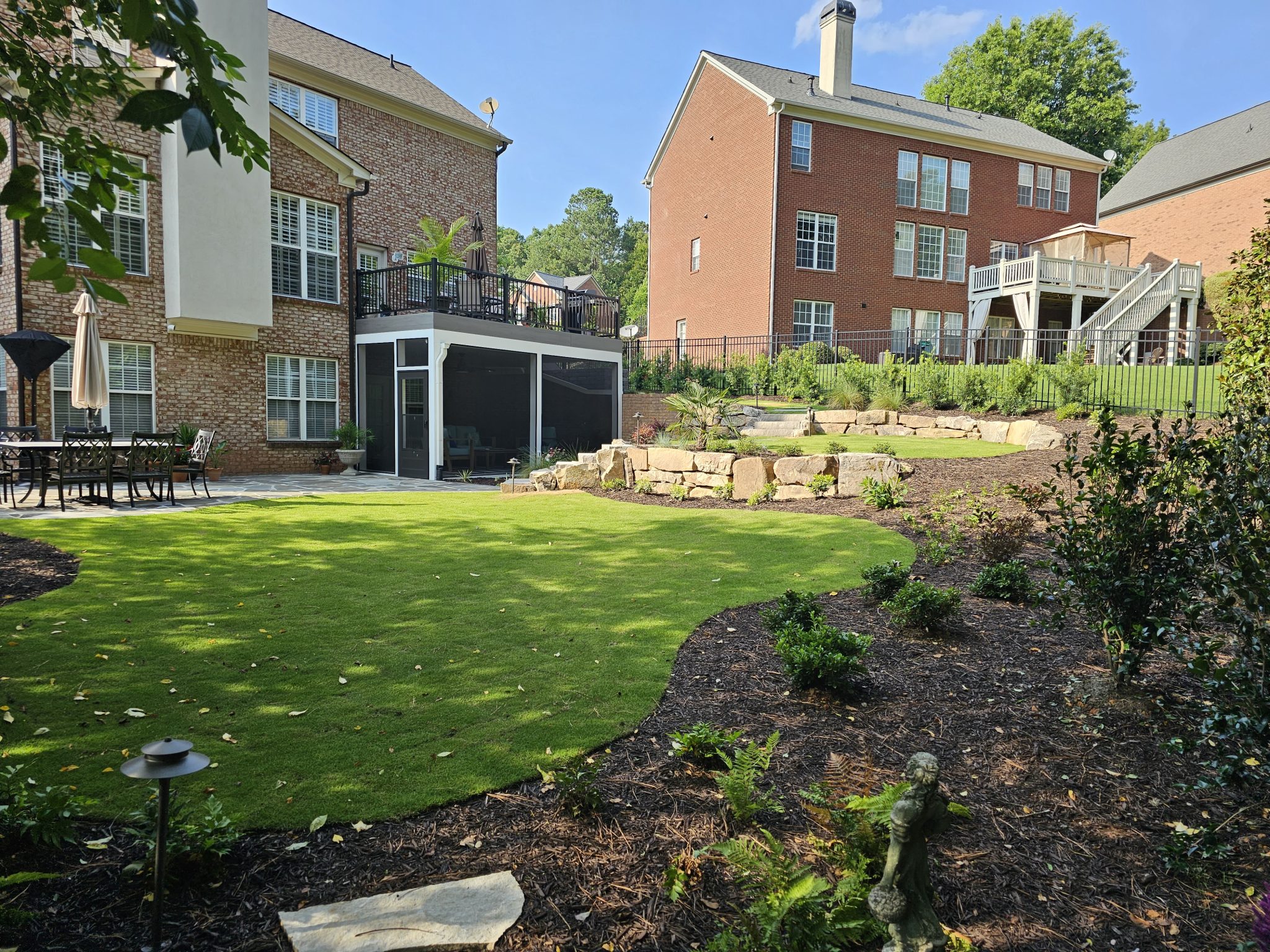
Design-led landscapes address these issues through proper grading, drainage planning, and thoughtful lawn placement. When water can move and settle correctly, turf remains more resilient under stress. Soil that supports root growth is one of the most effective defenses against heat damage.
Managing High-Traffic Lawn Areas
In family backyards, certain lawn areas naturally receive more use than others. These high-traffic zones are often the first to show wear during summer.
Rather than fighting this reality, successful landscape design works with it. By reinforcing circulation paths, balancing lawn with adjacent hardscape, and distributing activity across the yard, stress is reduced and recovery improves. Lawns designed for real use always outperform lawns designed purely for appearance.
Shade as a Lawn Protection Strategy
Strategic shade doesn’t just improve comfort for people—it also protects turf. Partial shade can significantly lower soil temperatures and reduce moisture loss during extreme heat.
Thoughtfully placed shade structures or natural shade elements can ease stress on exposed lawn areas without eliminating sunlight entirely. The goal is balance, not coverage, allowing lawns to recover more effectively through the summer.
Avoiding the Urge to Overcorrect
One of the most common summer lawn mistakes is overreaction. When lawns show signs of stress, the instinct is often to water more frequently or apply aggressive treatments.
In reality, stressed turf benefits from consistency and restraint. Excessive intervention during extreme heat can weaken root systems and prolong recovery. Landscapes designed with summer conditions in mind require fewer reactive measures and remain more stable through heat waves.
Designing Lawns for Function, Not Perfection
Luxury outdoor spaces should support everyday life. Lawns designed solely to look perfect under all conditions often struggle the most.
Performance-focused lawn design prioritizes durability, flexibility, and resilience. This approach results in turf that stays greener longer, recovers faster, and feels more usable for families throughout the season.
Long-Term Lawn Health Is a System, Not a Single Solution
Keeping a lawn green during summer isn’t about one product or one adjustment—it’s about how the entire outdoor environment works together. Layout, irrigation, soil conditions, drainage, and use patterns all play a role.
When these elements are aligned, lawns require less intervention and perform more consistently, even during Atlanta’s hottest months.

Why Professional Landscape Planning Makes the Difference
Summer lawn challenges are rarely solved with surface-level fixes. They require coordination between design, systems, and long-term planning.
Outdoor Makeover’s large-scale project capability allows us to design outdoor environments where lawns are supported by efficient irrigation, thoughtful layout, and climate-conscious planning. Our one-year support guarantee and extensive aftercare services ensure these systems are properly established to perform from day one.
A Greener Lawn Starts Before Summer Begins
The healthiest summer lawns aren’t maintained into shape—they’re designed for it. When lawns are placed intentionally, supported by smart irrigation, and protected through thoughtful design, they remain greener, stronger, and more resilient through Atlanta’s heat.
At Outdoor Makeover, we design outdoor environments that work with the climate, not against it. Through strategic planning and refined craftsmanship, we help homeowners enjoy lawns that stay healthy and inviting all summer long—without constant intervention.