Pool Installation in Greater Atlanta

Pool Installation as Part of Your Backyard Design
Outdoor Makeover & Living Spaces helps Greater Atlanta homeowners plan pool projects as part of a complete outdoor living space. Start with how you want to use your backyard, then consider the pool, surrounding deck, access and places to relax together.
Explore our pool design services or book a consultation to discuss your property.
Start with Your Property and Priorities
A pool project begins with a review of the space and your goals. Bring property plans if available, inspiration photos and an anticipated investment range. Discuss swimming, entertaining and everyday use so the design reflects your priorities.
Understand the Scope Before Construction
Pool size, site preparation, access, selected features and surrounding improvements influence the project scope. Your design and written proposal should identify what is included and the next steps for your property. Timing depends on the approved scope and project conditions.
Plan Your Pool and the Space Around It
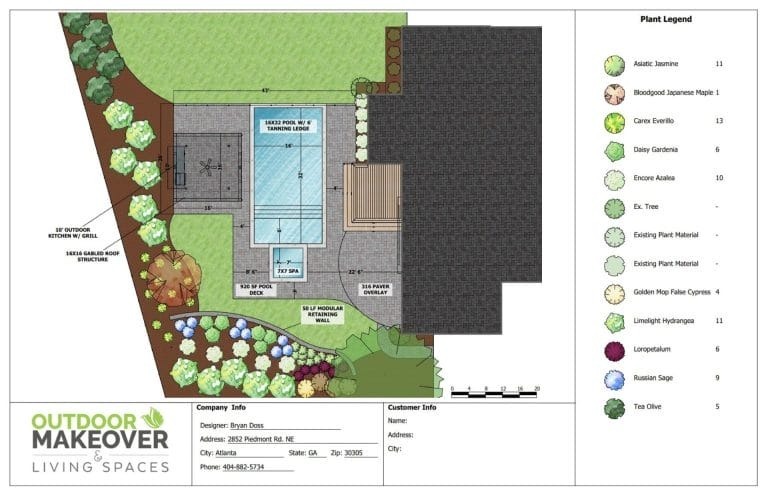
Pool Design
Discuss the shape, layout and intended use of your pool as part of the overall backyard plan.

Decking and Surrounds
Consider places to walk, sit and gather around the pool and how they connect to your home.

Lighting
Discuss lighting goals and how you want to use the pool area in the evening.

Water Features and Spas
Explore whether a water feature or spa belongs in your project and confirm the selected scope.

Access and Landscaping
Plan paths, planting and connections to other outdoor spaces alongside the pool.


Take the Next Step
Contact our Client Concierge to discuss your pool project and the appropriate consultation. Review our outdoor living investment guide to prepare for a conversation about priorities and budget.

Consult
Start with our Client Concierge to discuss your goals, property, scope and anticipated investment. We confirm service availability and recommend the appropriate paid consultation: Elevate ($99), Lifestyle ($249) or Legacy ($499).
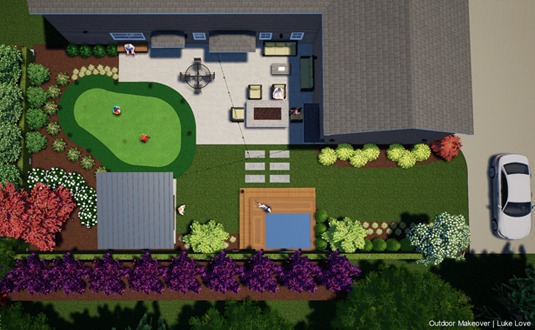
Design
Elevate includes a preliminary sketch and project estimate. Lifestyle and Legacy include a 2D digital design, with one and three included revisions respectively. An optional 3D design add-on is available with Lifestyle and Legacy for an additional $500; it is not available with Elevate. Your designer confirms the scope, deliverables and timing for your property.
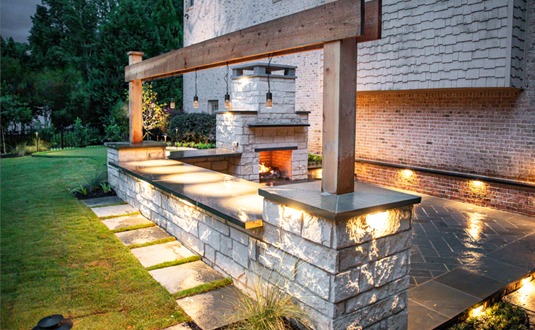
Build
After you approve the design and written construction proposal, our project team coordinates the work, materials and relevant specialists. We explain project-specific timing, keep you informed and document approved scope changes as your outdoor space takes shape.
Satisfy
At the final walkthrough, we explain the installed features and care instructions and review the applicable written warranty terms. Your project team remains your contact for follow-up questions, so you can enjoy the completed space with confidence.
Our Process
Q: How long does it take to install a pool?
A: Installation usually takes 12–20 weeks, depending on the size, complexity, and features. It’s not just the pool shell—it’s all the outdoor living elements around the pool that add time to the project.
Q: How long does it take to permit a pool around Atlanta?
Permitting time varies by jurisdiction, property conditions, project scope and review requests. Ask our team to confirm the current requirements and anticipated review process for your address before setting a construction date. Permit review and construction are separate parts of the overall schedule.
Q: What type of pool is best for my yard?
A: It depends on space, budget, and your design goals. Common options include:
Gunite/Shotcrete (concrete): Fully custom, long-lasting
Fiberglass: Pre-fabricated, limited in size/shape
Vinyl: Budget-friendly, but lower durability
Q: Why are shotcrete or gunite pools the best choice?
A: While more expensive, shotcrete and gunite pools offer several key advantages:
- Fully customizable shapes and sizes
- Longer lifespan
- Greater durability compared to fiberglass and vinyl
Vinyl liners deteriorate in 5–10 years due to UV and chlorine exposure. Fiberglass pools can crack or collapse if not backfilled correctly. Shotcrete and gunite pools form a strong concrete shell, providing a long-lasting and visually stunning investment.
Q: What’s the difference between gunite and shotcrete?
A: Both result in a solid concrete pool.
- Shotcrete: Pre-mixed wet concrete delivered to the site and sprayed directly.
- Gunite: A dry mix combined with water at the nozzle during spraying.
There’s no major difference in price or durability—choice usually depends on proximity to concrete plants and environmental conditions.
Q: What is the average pool size in Atlanta, GA?
The right pool size depends on how you plan to use it, your property layout and the space needed for decking, access, landscaping and equipment. Setbacks, easements and local requirements must be reviewed for your property. For scale, a 12-by-24-foot rectangle covers 288 square feet before adding surrounding improvements.
Q: Can I use a spa in the wintertime?
A spa may be used in cold weather when the equipment and operating instructions allow it, but heat exposure requires care. CDC advises keeping hot-tub water at or below 104°F, avoiding alcohol, and keeping children under five out. If you are pregnant, consult a healthcare provider before use. Follow your spa manufacturer’s instructions and CDC hot-tub guidance.
Q: Is it worth adding a heater to the pool?
A: Yes. In Atlanta, a heater allows you to start using your pool in early May and extend usage through October. Heated Pools are a standard for Outdoor Makeover & Living Spaces.
Q: How long does it take to heat the pool in early spring?
Heating time depends on water volume, heater output, starting and target temperatures, air temperature and heat loss. A universal four-to-six-hour estimate is not reliable. Ask for an estimate based on your selected equipment and pool or spa dimensions.
Q: Can I use my pool as a cold plunge in the winter?
Do not assume an unheated winter pool is suitable for cold plunging. Sudden cold-water immersion can affect breathing, heart rate and blood pressure. Discuss suitability with a healthcare professional before considering cold-water immersion. Read the National Weather Service’s cold-water safety guidance.
Q: Can I turn my spa into a cold plunge in summer?
Cooling capability depends on the equipment, water volume and target temperature. Ask the equipment supplier whether a compatible system can meet your needs. A standard heated spa should not be assumed to function as a cold plunge.
Q: What are some kid-friendly features to add to my pool?
A:
- Large slides with circulating water
- Bubblers on tanning ledges
- Waterfalls, spigots, and sheer descents
- Jumping rocks or small retaining walls
- Color-changing pool lights
Basketball hoops or volleyball nets
Q: What are adult-friendly features to add to the pool?
A:
- Tanning ledge seating
- Built-in bar stools and benches
- Poolside counters for drinks
- Swings or daybeds on tanning ledges
- Water features for ambiance
Spa area for hydrotherapy
Q: What’s a fun upgrade for my pool?
The best upgrade depends on how you want to use your backyard. A spa, water feature, lighting or additional gathering space may fit different priorities. Review installation cost, operating needs and maintenance before choosing additions.
Q: What are the benefits of saltwater systems vs. chlorine?
A saltwater system uses a salt chlorine generator to produce chlorine from dissolved salt. It still requires water testing, balanced chemistry and equipment maintenance. Comfort, corrosion risk and lifetime cost depend on the system and its care; no system guarantees irritation-free swimming. See Pentair’s overview of saltwater pool tradeoffs.
Q: What is the best way to clean the pool?
A: Keep skimmers and filters clean for optimal performance.
- Skimmers remove floating debris.
- Robotic cleaners scrub and circulate settled debris.
- Cartridge filters in the pool system remove fine particles.
Q: Should I cover my pool in the summer in Atlanta?
A properly selected and maintained safety cover can be one layer of protection. A cover does not replace close adult supervision or appropriate barriers and alarms, and not every pool cover is a safety cover. Follow the cover manufacturer’s instructions and review CPSC Pool Safely guidance on barriers, covers and alarms.
Q: Should I use PebbleTec or StoneScapes for interior pool finishes?
A: Both offer similar quality and aesthetics. PebbleTec is more well-known and often more expensive. We often recommend StoneScapes to deliver excellent results at a better price.