Retaining Walls

The Backyard Retaining Wall is an essential part of Atlanta’s landscapes, especially with its hilly terrain. They not only enhance your property’s appearance but also strengthen its foundation and provide flat areas for outdoor activities. Landscaping and retaining walls manage water, look attractive, and safeguard your land and foundation. When added into landscape design, they elevate the overall ambiance, making your backyard even more enjoyable and functional.


OUR RETAINING WALL OPTIONS

Boulder Retaining Walls
Boulder Retaining walls can create group plants, pathways, and gardens, adding texture and depth to enhance the feel and shape of an environment altogether. These walls balance a slope and save planted areas from erosion..

Belgard Segmental Retaining Wall
Retaining walls are needed for structural support and slopes, as they use grounds to hold a wall in place and nicely retain soil. They can be built to any height and width to match any desired look.

Belgard Diamond Pro
Diamond Pro is ideal for retaining walls, terraces, and freestanding walls. Its sleek, timeless design and durability transform outdoor spaces into stunning landscapes that stand the test of time.

Belgard Weston Wall
Belgard Weston Wall is designed to enhance outdoor landscapes. It offers unmatched versatility when used for retaining walls, raised planters, or garden edging. Available in a range of colors, allowing for endless design possibilities.

Portland
Portland is an excellent option for enhancing the aesthetics of a retaining wall. It adds a touch of elegance while providing durability and easy maintenance.

Tennesee Ashler Finish
Want to add a touch of sophistication to your outdoor spaces? Tennessee Ashler finish is a stunning choice. Its smooth surface and clean lines offer a contemporary and refined look to any retaining wall.

Tennesee Medium Stack Finish
Tennesee medium stack finish is an excellent option that elevates the visual appearance of your retaining wall. Elevate the visual appeal of your retaining wall textured surface, and warm earthy tones bring a touch of rustic elegance to your outdoor space.

Granite Finish
The granite finish is a stunning choice for retaining walls, adding a touch of luxury to any outdoor space. Its natural beauty, characterized by unique patterns and colors, creates a visually captivating focal point.

Black Veneer Stackstone Finish
A black veneer stack stone finish is an ideal option for retaining walls. Its textured surface and stacked stone patterns add visual appeal and a touch of elegance. Overall, it enhances aesthetics and blends well with outdoor surroundings.

White Veneer Stackstone Finish
Enhance the look of your retaining wall with the classic charm of a White Veneer Stacked Stone finish. This finish makes your retaining wall a stunning centerpiece that exudes beauty and practicality.

Blue Gray Rubble Finish
A blue-gray rubble finish transforms your retaining wall and makes it captivating. Its unique and natural charm creates a stunning focal point, elevating the aesthetic appeal of your retaining wall in Atlanta.

Brick Wall
Brick walls are an excellent choice for interior and exterior spaces due to their durability, strength, and aesthetic appeal. They offer excellent insulation, fire resistance, and a charming rustic look.
Contact The Best Retaining Wall Contractor in Atlanta Today
Outdoor Makeover and Living Spaces is best known for retaining wall contractors who understand your goals. We strive to provide meticulous construction and second-to-none customer service. Don’t hassle to find “Retaining Wall Contractors near Me”! Contact us and request a consultation right away.

Consult
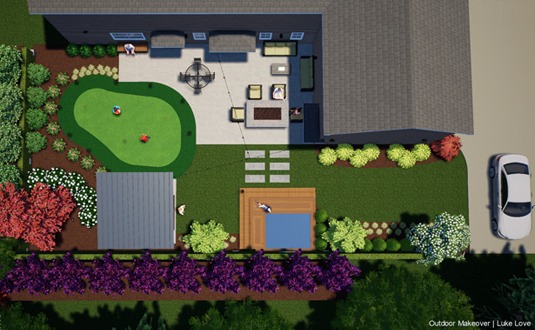
Design
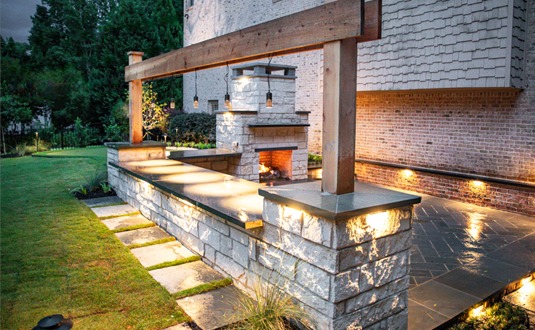
Build
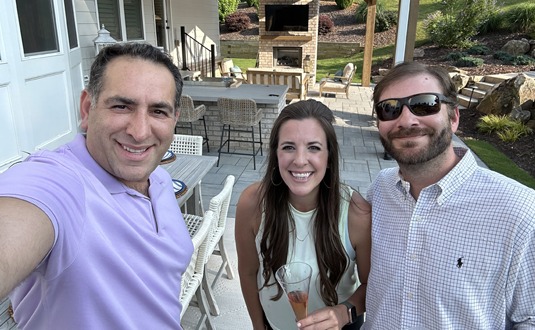
Satisfy
Our Process
Q: Why would I need a retaining wall?
A: Retaining walls are hardscape elements that add structure and beauty to the landscape. Obviously, it needs to be designed appropriately; however, when it’s done right, it will add a beautiful layer of design to the landscape.
If there are slopes in the backyard, retaining walls help level the area, hold soil back, prevent erosion, and manage slopes. Walls break up the continuity of a sloped backyard. For example, if you have a 3 ft elevation change with the house being lower, a 3 ft wall will serve as the retaining system for all the soil. It will give the area structure and provide a focal point in the backyard.
When there is a slope, water accelerates, flowing through the landscape, dissolving soil and causing erosion.
A sloped backyard also has the least amount of level area for play, so the wall reduces the elevation change to a minimum and removes the ramp-like feel in the backyard.
A similar scenario is when the house is at a high level with a 3-foot drop to a lower area. By putting a wall at the end of the property line and filling up the drop with soil, homeowners gain all that usable space.
Q: What factors should I consider for a retaining wall?
A: Homeowners have many options to finish or veneer a wall, but there are limited materials for the foundation and retaining system.
Modular blocks, concrete-molded to a rectangular shape, build the wall at the best value. These segmental concrete walls sit on a gravel or aggregate foundation and are stacked to the desired height. Manufacturers can beautify these by adding dye to the concrete and creating different sizes and textures. The price per square foot depends on the concrete’s quality and texture, while labor costs often remain the same.
Another method is creating a full-on concrete foundation and retaining wall. The foundation must be all concrete, and the wall must become a unit with the foundation, using rebar. The wall could be made with cinder block or framed and poured concrete.
Simply put, at this stage, the walls are done and performing their job: retaining soil and preventing erosion. But homeowners often go further and face these concrete walls with a decorative finish using natural stone, faux stone, or outdoor tile.
We don’t recommend wooden retaining walls. Pressure-treated lumber does not last long when it actually comes into contact with soil. They usually rot in 5 years or less and require a redo. We still see timber walls that last 30 to 40 years, but the EPA has changed their formula for outdoor treatment.
Q: While I design a wall, what else can I incorporate for outdoor living?
A: Depending on height and distance from the house, the wall can host some fun activities or accessories.
- For kids, they become a jumping rock when their height is less than 3 ft.
- Depending on height, it can also serve as a soccer practice wall.
- For ambiance, we recommend putting under-cap lights to illuminate it at night.
- The wall becomes an amazing feature.
Outdoor Makeover and Living Spaces have also turned walls into water features. With the elevation change of a wall, we’ve designed water spillways or actual waterfalls using boulders to guide the water down.
Q: Do I need a permit for building a wall?
A: Most walls under 3 ft are simple, as long as the right-size foundation and a proper drainage system have been built to alleviate the buildup of hydrostatic pressure. So most cities and codes are more relaxed because they don’t require permits for these short walls.
However, many cities and municipalities still require a soil disturbance permit for grading and moving dirt around to create a wall. It is best to check with the city.
For walls above 3 ft, other geological factors begin to affect the wall and push it. This is where the city requires a permit to ensure it’s built properly. Our team is in touch with engineers to gather feedback and build it to spec, meeting and exceeding city requirements, and rendering the wall with the longest longevity.
Q: Can anyone build a wall? Can my lawn guys build a wall?
A: Outdoor Makeover and Living Spaces has rebuilt many new walls. We know it’s convenient to hire the lawn guy; they’re already there, you have a relationship with them, and they’re always nice and pleasant. They are often the first choice to redo things outdoors.
But as we expect great results in other aspects of our lives, walls have to be built to a certain spec to stand and last a long time. We see uneven rows in walls, clay leeches between the blocks, unglued caps, and bowing—all common issues.
There’s only one way to build walls properly, and NCMA (National Concrete Masonry Association) provides that training. We are proud to say that we all follow NCMA as our standard operating procedure to ensure all of our walls meet code.
Q: Are stacked stone walls more expensive than modular walls?
A: Yes, they are. Stacked stone walls are masonry walls that require a concrete foundation and concrete block to retain the soil. Once you have the wall to this point, it takes days to face the concrete wall with intricate stonework. It takes a lot of precision and craft to create stacked stone walls. All of these factors add complexity—hence the extra labor and cost.
Q: Should I build one big wall or terrace it into smaller walls?
A: As designers, we all prefer the terraced look. We could build a 6 ft wall or two 3 ft walls about 4 ft apart, which creates a softer hardscape. The space between is often landscaped with beautiful plantings, which soften the second wall.
Standing next to a tall wall makes the space feel smaller, whereas two walls open it up. The only time we’d go for a large wall is when space is limited.
Q: Can I slope the backyard instead of building a wall?
A: Yes, if you truly must—or can’t afford a wall project.
Usually, there’s a lot of work involved in bringing in enough soil to the backyard to support a drop-off. The soil slope has to meet a 3:1 ratio to hold the dirt behind it—that’s 1 ft of elevation for every 3 ft of slope (33 degrees). This is the slope geotech engineers recommend. It must be compacted and cannot have flowing water on top, as that causes erosion.
Although this is necessary in certain applications, in a homeowner’s backyard, this would eat up so much usable space. Retaining walls solve that problem—even though they are incrementally more expensive.