Outdoor Kitchen Mistakes to Avoid This Summer
Outdoor kitchens are one of the most impactful additions to an outdoor living environment—but they’re also one of the easiest places to get design wrong. In Atlanta, where summer heat, humidity, and frequent entertaining all collide, an outdoor kitchen must be more than visually appealing. It needs to function effortlessly, feel comfortable, and integrate seamlessly into the larger outdoor space.
Many outdoor kitchen issues don’t show up immediately. They appear months—or even years—later, when layouts feel awkward, materials don’t hold up, or the space simply isn’t used as often as expected. Here are the most common outdoor kitchen mistakes to avoid this summer—and how thoughtful design prevents them.
Mistake #1: Treating the Outdoor Kitchen as a Standalone Feature
One of the most frequent mistakes is designing an outdoor kitchen in isolation, rather than as part of a complete outdoor living environment.
When kitchens are disconnected:
- Flow between cooking, dining, and lounging feels awkward
- Hosts are separated from guests
- The space feels underused
Outdoor kitchens should be integrated, not appended. Proper placement ensures the kitchen supports conversation, connection, and movement throughout the space.
Mistake #2: Poor Layout That Disrupts Flow
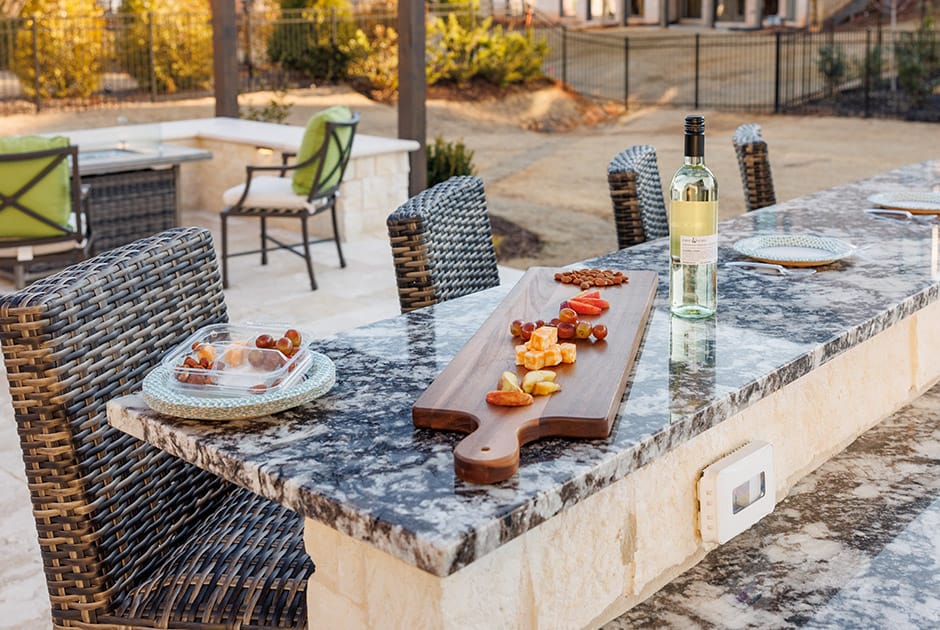
Just like indoor kitchens, outdoor kitchens depend heavily on layout. A visually impressive setup can still fail if movement feels cramped or inefficient.
Common layout issues include:
- Tight circulation paths
- Appliances blocking prep space
- No clear relationship to dining areas
Design-forward planning prioritizes clear movement and intuitive use—especially during gatherings.
Mistake #3: Ignoring Sun & Heat Exposure
Atlanta summers are no joke. Outdoor kitchens that don’t account for sun exposure often become uncomfortable during peak hours.
Design oversights include:
- Cooking areas in direct afternoon sun
- No shade for prep or serving zones
- Heat-reflective materials amplifying discomfort
Strategic orientation and integrated shade solutions dramatically improve usability.
Mistake #4: Choosing Materials That Can’t Handle the Climate
Outdoor kitchens are exposed to heat, moisture, grease, and heavy use. Materials selected for appearance alone often fail prematurely.
Common material mistakes:
- Indoor-rated finishes used outdoors
- Surfaces that stain or fade easily
- Cabinets not designed for moisture exposure
Durable, climate-appropriate materials protect both function and appearance long-term.
Mistake #5: Not Planning Enough Prep & Landing Space
Cooking outdoors requires space—not just appliances. Many kitchens are undersized when it comes to prep and landing zones.
Design gaps often include:
- Minimal counter space near grills
- No clear serving surfaces
- Limited room for staging food
Thoughtful design ensures the kitchen supports real cooking—not just grilling.

Mistake #6: Overloading the Kitchen With Features
More isn’t always better. Overdesigned outdoor kitchens often feel cluttered and underperform.
Signs of feature overload:
- Too many appliances competing for space
- Reduced prep and circulation areas
- A kitchen that dominates the patio visually
Luxury outdoor kitchens prioritize balance and restraint.
Mistake #7: Forgetting the Guest Experience
Outdoor kitchens are social spaces—but many designs focus only on the cook.
Guest-unfriendly designs:
- Turn the cook’s back to seating
- Isolate the kitchen from conversation
- Create bottlenecks around serving areas
Well-designed kitchens keep hosts engaged with guests throughout the experience.
Mistake #8: Poor Relationship to Dining Areas
An outdoor kitchen should feel naturally connected to dining—not distant or awkwardly positioned.
Common issues include:
- Long walks between grill and table
- Crossing high-traffic paths while carrying food
- No visual connection between spaces
Proximity and alignment matter more than size.
Mistake #9: Inadequate Lighting for Evening Use
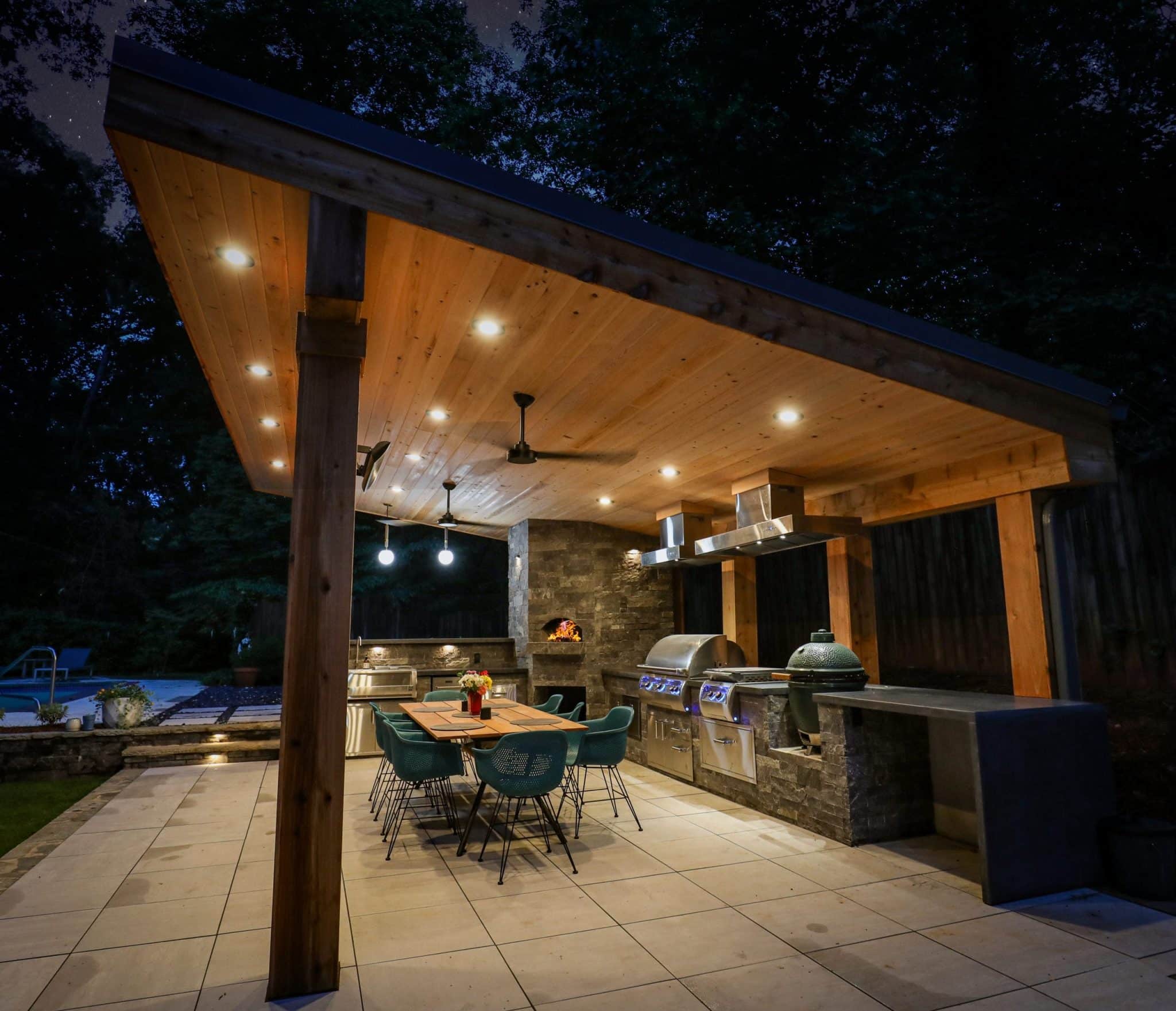
Many outdoor kitchens look great during the day but fall short after sunset.
Lighting mistakes include:
- Insufficient task lighting for cooking
- Overly harsh fixtures
- No ambient lighting for atmosphere
Layered lighting ensures the kitchen is functional and inviting at night.
Mistake #10: Overlooking Storage Needs
Outdoor kitchens need storage just as much as indoor ones—often more.
Storage-related oversights:
- No space for tools and utensils
- Exposed items cluttering surfaces
- Cabinets not designed for outdoor conditions
Integrated storage keeps kitchens organized and visually clean.
Mistake #11: Designing for One Season Only
Some outdoor kitchens are designed with summer in mind—but not beyond it.
Short-sighted designs:
- Lack flexibility for cooler months
- Feel unused outside peak season
- Don’t integrate with year-round outdoor spaces
Smart design extends usability well beyond summer.
Mistake #12: Ignoring Family-Friendly Functionality
Outdoor kitchens should support family life—not complicate it.
Family-focused design considers:
- Safe circulation around hot surfaces
- Clear sightlines to play areas
- Durable finishes that handle daily use
This ensures the kitchen works for everyday living—not just entertaining.
Mistake #13: Underestimating How Often the Kitchen Will Be Used
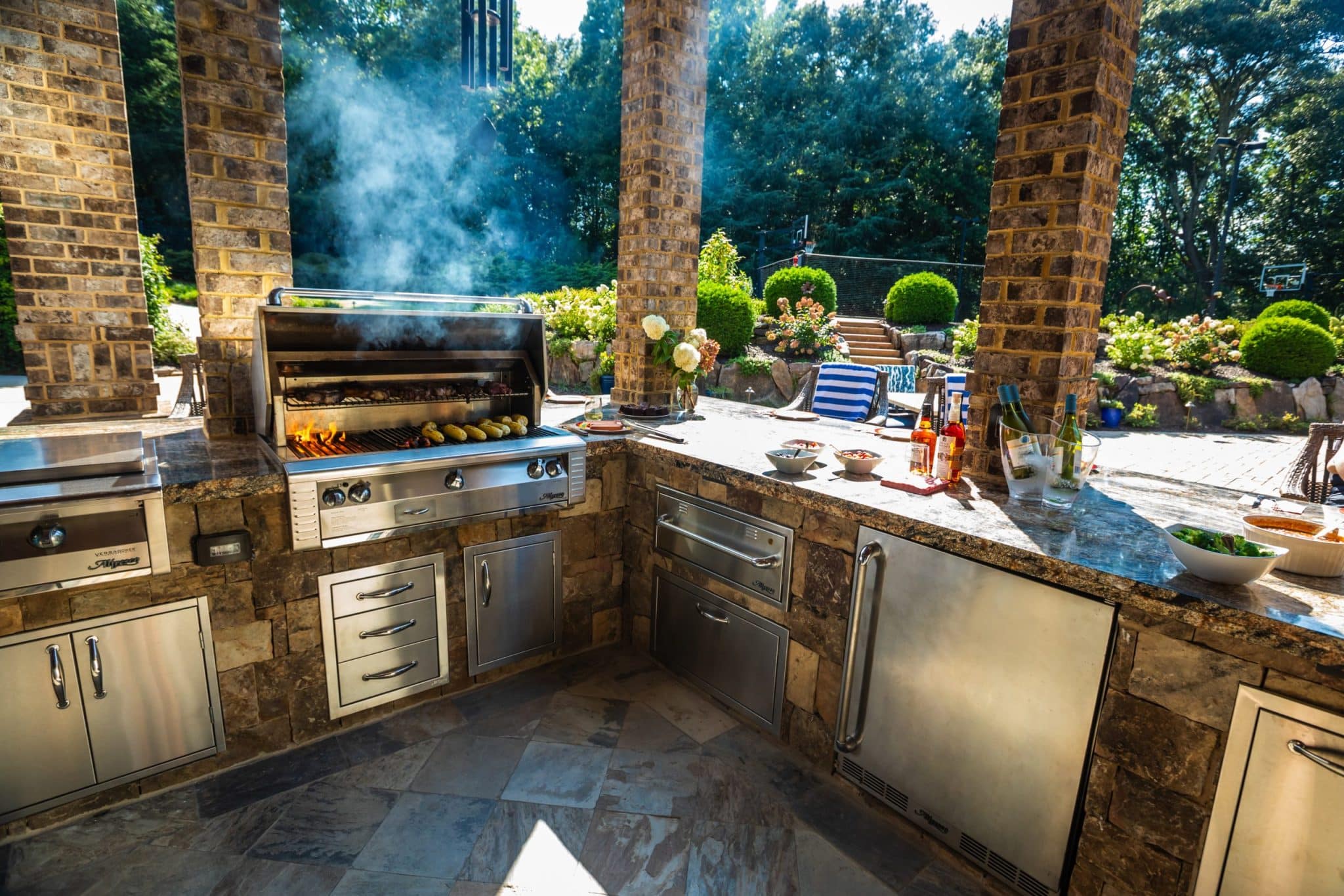
Many homeowners design outdoor kitchens for special occasions—but end up using them far more often.
Underdesigned kitchens:
- Feel inconvenient for quick meals
- Lack everyday functionality
- Go unused more than expected
Designing for frequent use increases return on investment.
Mistake #14: Skipping Professional Planning
Outdoor kitchens require coordination across design, utilities, materials, and layout. Without professional planning, mistakes compound.
DIY or piecemeal approaches often lead to:
- Layout inefficiencies
- Material failures
- Costly revisions later
Professional design prevents problems before they happen.
Mistake #15: Forgetting the Bigger Picture
The most important mistake is forgetting that an outdoor kitchen is part of a larger lifestyle vision.
Great outdoor kitchens:
- Support how families gather
- Complement outdoor living zones
- Feel intentional, not trendy
They enhance everyday life—not just aesthetics.

Why Thoughtful Design Makes All the Difference
Avoiding these mistakes isn’t about perfection—it’s about intention. When outdoor kitchens are designed as part of a cohesive outdoor environment, they feel effortless, functional, and enduring.
Outdoor Makeover’s large-scale project capability allows us to design outdoor kitchens that integrate seamlessly with patios, structures, planting, and lighting. Our one-year support guarantee and extensive aftercare services ensure these spaces continue performing beautifully long after installation.
Outdoor Kitchens Designed for Real Life
The best outdoor kitchens don’t draw attention to themselves—they simply work. They support gathering, cooking, conversation, and comfort without friction.
At Outdoor Makeover, we design outdoor kitchens that align with real life in Atlanta. Through thoughtful planning, refined materials, and expert craftsmanship, we help homeowners avoid costly mistakes and create outdoor chef spaces that feel just as good years from now as they do this summer.